

DMF Waste Gas Recovery Plant


Equipment Description
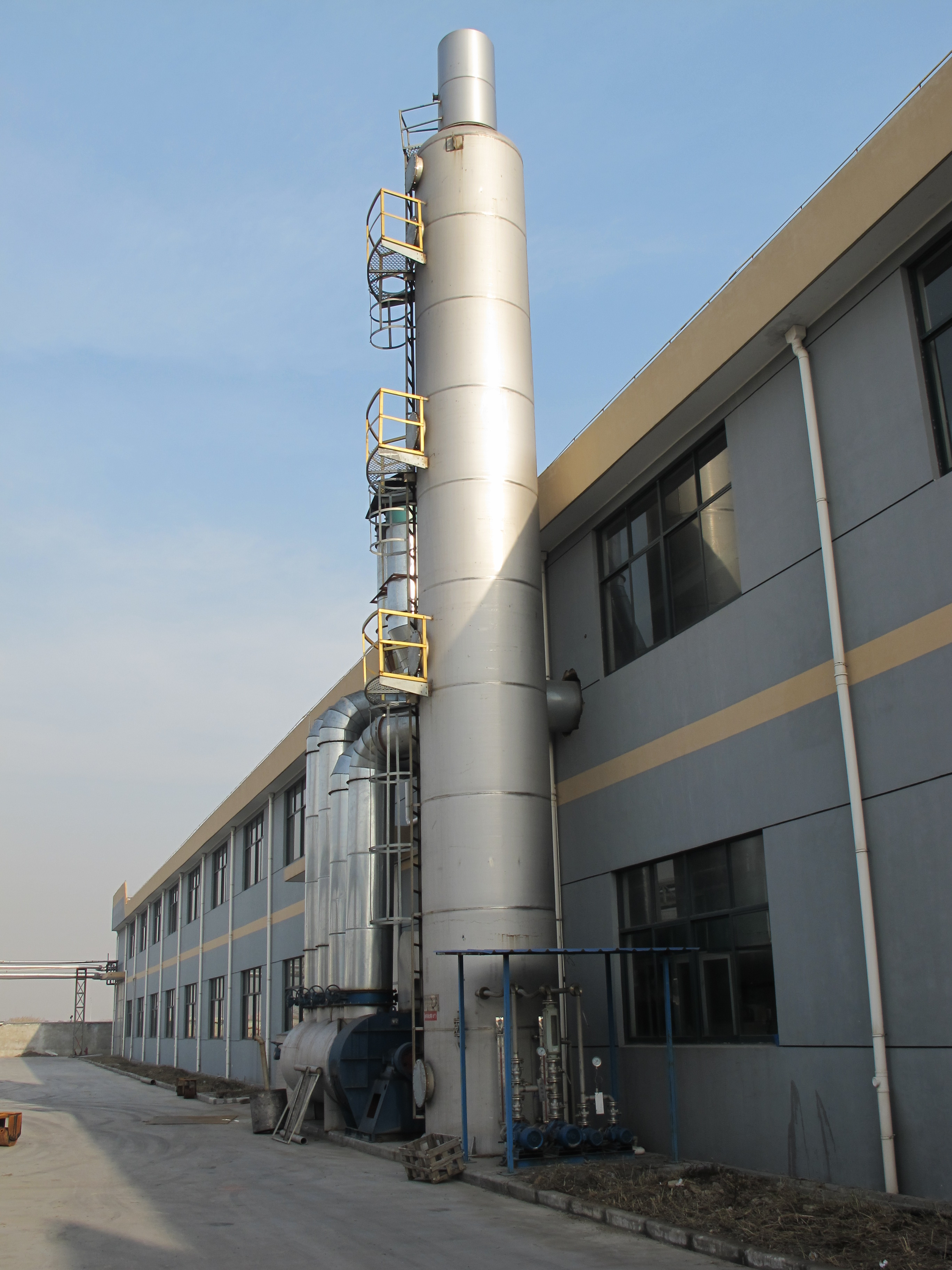
In the light of the dry & wet production lines of the synthetic leather enterprises emitted DMF exhaust gas, the DMF waste gas recovery plant can make the exhaust reaches the requirements of environmental protection, and recycling the DMF components, using high performance fillers make DMF recovery efficiency higher. The DMF recovery can reach above 95%.
The device adopts the cleaning technology of spray adsorbent. DMF is easy to dissolve in water and water as its absorbent has low price and easy to gain and the water solution of DMF easy to rectify and separate to get the pure DMF. So the water as the absorbent to absorb DMF in the exhaust gas, and then send the absorbed DMF waste liquid to the recovery device to refine and recycle.
Technical Index
For liquid concentration 15%, the output gas concentration of the system guaranteed at ≤ 40mg/m3
For liquid concentration 25%, the output gas concentration of the system guaranteed at ≤ 80mg/m3
The exhaust gas absorption tower distributor uses spiral, large flux and 90° high-efficiency nozzle
Packing uses stainless steel BX500, the total pressure drop is 3. 2mbar
Absorption rate: ≥95%
Related products
-

DCS Control System
System Description DMF recovery process is a typical chemical distillation process, characterized by a large degree of correlation between process parameters and a high requirement for recovery indicators. From the current situation, the conventional instrument system is difficult to achieve real-time and effective monitoring of the process, so the control is often unstable and the composition exceeds the standard, which affects the production efficiency of enterpri...
-

DMAC Solvent Recovery Plant
Equipment Description This DMAC recovery system uses five-stage vacuum dehydration and one-stage high vacuum rectification to separate DMAC from water, and combines with vacuum deacidification column to obtain DMAC products with excellent indexes. Combined with evaporation filtration and residual liquid evaporation system, the impurities mixed in DMAC waste liquid can form solid residue, improve the recovery rate and reduce pollution. This device adopts the main proc...
-

DMA Treatment Plant
Main Features During the DMF rectifying and recovery process, due to the high temperature and Hydrolysis, parts of the DMF will be disintergrated to FA and DMA. The DMA will cause odor pollution, and bring serious impact for the operation environment and the enterprise. To follow the idea of Environment protection, the DMA waste should be incinerated, and discharged without pollution. We have developed the DMA wastewater purification process, can get about 40% indus...
-

DMF Effluent Recovery Plant
General Description This proposal is designed for the recovery of DMF effluent generated during process of RO membrane production. Due to the low effluent concentration (~5%), considering the operating cost of the DMF effluent recovery equipment, the process flow is designed based on a three-efficiency energy-saving process, including two-stage concentration and dehydration, one-stage distillation and one-stage deacidification and refining. At the same time, the en...
-

PLC Control System in DMF Recovery
1. Process Overview: What is DMF Recovery? DMF is a common industrial solvent. Due to its cost and environmental regulations, it is often recovered from waste streams (e.g., from pharmaceutical or synthetic leather industries) rather than disposed of. The most common method is Distillation: Feeding: The waste DMF mixture is pumped from a storage tank into a distillation column. Heating: The mixture is heated in a reboiler. DMF has a higher boiling point than water a...
-

MVR in DMF recovery
MVR in DMF recovery The MVR (Mother Vapor Recompression) function in DMF (Dimethylformamide) recovery systems is a key energy-saving technology used to enhance efficiency in solvent recovery processes, particularly in industries like pharmaceuticals, chemicals, and synthetic leather manufacturing, where DMF is widely used. Role of MVR in DMF Recovery Plant Energy Efficiency Traditional distillation for DMF recovery consumes significant energy due to high boiling p...